
“I’M FINE” — REFLEX OR TRUTH?
STILL HERE. LESS PRESENT.

“I’m fine.”
We have heard it countless times and said it just as often. It is one of the most efficient sentences available to an adult. It keeps momentum in a conversation, it regulates the temperature, and it reassures without demanding anything from anyone. In many situations, it is the appropriate answer: polite, functional, economical. It signals that nothing requires attention, that the social mechanism can continue without adjustment, that the moment does not need to open further. In most contexts, it is exactly what is expected.
The people who say it are rarely lying, yet they are almost always managing something. The sentence chooses continuity over interruption, coherence over disclosure. “I am fine” often reflects less about internal state and more about what the situation seems to require: a meeting already in motion, a passing question on a staircase, a social exchange where depth would be inconvenient or misplaced. In that sense, the sentence performs as intended.
The difficulty begins when this reflex becomes habitual. When “I am fine” is no longer a situational choice but the only available position, not because nothing is happening, but because acknowledging what is happening would slow the rhythm, alter the mood, or introduce uncertainty. Over time, the answer stops responding to the moment and begins to sustain an identity: capable, composed, unproblematic. It becomes less a report and more a maintenance strategy.
This is how regulation replaces honesty, not through suppression but through repetition. The sentence keeps the system stable and protects both sides from friction. After a while, it no longer feels like speech but like posture. It is familiar, efficient, and self-preserving. The adult who uses it may even forget it was ever a choice.
At that point, “I am fine” is not an answer.
It is a position taken in public.
Disappearing Socially
There is a form of disappearing that does not look like absence at all. It looks like reliability. It looks like someone who knows how to hold a room together without drawing any attention to themselves. They facilitate, they organise, they keep things moving. They are the person people trust with microphones, agendas, and delicate situations. Their presence is taken for granted because it is so easy to rely on.
In these settings, contact gives way to competence. Meetings, events, and gatherings turn into arenas of smooth execution. They arrive prepared, they speak when required, they fill in gaps, and they do not clutter the atmosphere with anything personal. People notice how steady they are. What they do not notice is the cost of being steady for too long. It is surprisingly simple to become a logistical version of oneself.
The uncomfortable part is that most people who operate this way do not think of it as withdrawal. They think of it as doing what the moment demands. It feels responsible, adult, and socially intelligent. There is even a kind of relief in it: no one asks difficult questions, nothing spills, nothing slows down. The world seems grateful for the arrangement, so why disturb it?
Until something disturbs it. I recognised this pattern in my own life long before I had language for it. Years ago, I stood on a stage after a tribute to a colleague who had died. I had planned to be composed and credible. Instead, I cried and left the podium. A coworker told me later that I should do that more often. At the time, I heard it as mockery. Only later did I understand that he was asking for humanity, not spectacle.
And that is where the disappearing becomes visible. Not in the polished moments, but in the ones where composure fails. That is when a person recognises how far they have drifted into functionality, how little space they have kept for their own interior life. Other people might interpret the distance as coldness or aloofness, but it is usually just long-term self-management. It is the skill of staying out of the way for so long that you eventually forget how to be in it.
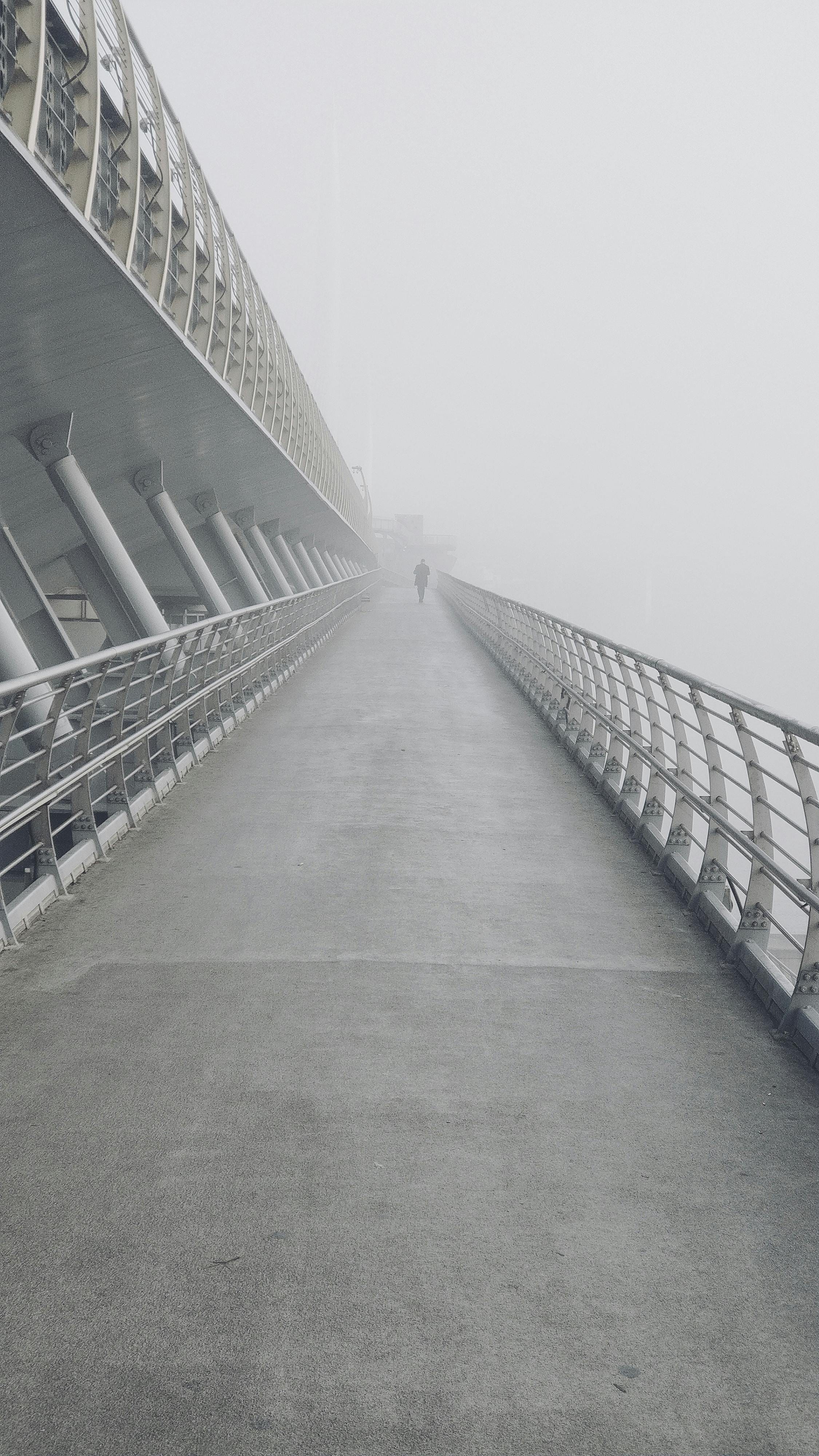
Over time, this responsible mode stops being situational and becomes habitual. It follows them home. Friends receive the same filtered version that colleagues do. Family encounters the same steadiness that clients admire. And at some point, often without drama, they realise that people know their role but not their reality, and that somewhere along the line they traded visibility for control.
Privacy vs Self-Erasure
Privacy is not the enemy. Privacy is a form of dignity. It is the refusal to treat one’s interior life as public property. Many high-functioning adults practice privacy out of respect for others as much as for themselves. They do not want to burden a room with personal grief. They do not want to derail a meeting with sorrow or confusion. The intention is not secrecy but permission. They decide what belongs where.
In professional environments, this restraint is often rewarded. Composure is seen as maturity. Discretion passes for strength. A person who does not spill becomes the person others rely on, because they do not complicate the moment with emotion. The line between decency and erasure begins there, long before anyone realises there is a line at all.
The difficulty is that privacy can harden. What begins as a choice can become a default. The person stops sharing not because they are withholding, but because it no longer occurs to them that they could. Grief, frustration, and fear are absorbed rather than expressed, not out of shame but out of habit. The body registers the events, but the room never does. And the longer this goes on, the easier it becomes to imagine that nothing needs saying.
This is where privacy shades into self-erasure. Not immediately, but gradually, through countless small decisions to stay composed rather than risk burdening anyone. The self is not protected in this arrangement; it is diluted. The person remains visible and competent, but their inner life becomes thin from lack of use. They have preserved their civility at the expense of their humanity.
The tragedy shows itself last. It does not appear in boardrooms or team calls, where discretion passes unquestioned. It appears at home. Partners notice the distance first. Children sense the absence without knowing what to call it. Friends begin to speak to the role rather than the person, because that is all that has been offered for a long time. What started as professionalism travels across the threshold and takes up residence in the living room.
By the time the person notices the shift, the habit feels like personality. They tell themselves they are private when the truth is that they have stopped permitting access altogether. They have become easier to work with and harder to know. Privacy preserves the self. Self-erasure removes it from the room. The distinction matters because one protects the relationship, and the other eventually empties it.
When Stability Turns Into Loneliness
Eventually, something else enters the picture, not as a crisis, but as an absence.
Loneliness does not always announce itself. Sometimes it arrives disguised as efficiency. Days run smoothly, calendars stay full, responsibilities are met without hesitation. People comment on how capable you are, how organised, how steady. They are not wrong. You have become excellent at moving through the world without requiring anything from it.
This version of loneliness is difficult to diagnose because nothing is missing in the visible sense. Work is handled, family is managed, and friendships are maintained in low-maintenance forms. There are no alarm bells. There is no obvious crisis. There is only the slow recognition that conversations have become informational, that gatherings feel observational, that nothing seems to penetrate the surface of your life.
It is a loneliness without absence. You are in the room, often in the centre of it, fulfilling your role with precision. People thank you, rely on you, depend on you. Yet when the moment ends, there is no residue of contact, no sense of having been with anyone. The world registers your contribution but not your presence. And when this has gone on long enough, even you stop registering your presence.
The strangest part is how stable it all feels. There is no drama, no collapse, no scene. Just a quiet hollowing that is easy to ignore because everything still functions. Loneliness in this form rarely comes with tears. It comes with competence. It comes with lists completed and obligations met. It comes with evenings that feel weightless and mornings that feel the same.
What makes it difficult to name is that nothing external fails. The failure is relational and internal. It is the absence of being met by anyone, including yourself. You realise at some point that people know what you do, but no one knows how it feels to be you. And that gap, once it opens, is hard to close alone.
Reclaiming Presence
Presence does not return through catharsis. It returns through contact. And contact does not require confession. It requires that a person allow themselves to be seen in small, ordinary ways: a preference stated instead of deferred, a frustration named instead of swallowed, a moment of humour allowed to surface instead of being tidied away. These are minor disclosures, but they reintroduce the self into the room.
This is not about emotional dumping, dramatic vulnerability, or oversharing. It is about letting others register that you have an interior life and that it is active even when you are composed. Connection requires access, not spectacle. People do not need your secrets to feel close to you. They need evidence that you are present.
The shift is interpersonal before it is introspective. A person does not find themselves alone in a room and then return to others. They return to others and then find themselves. The smallest acts of self-expression have a way of restoring internal bearings. Something settles when the self is not entirely concealed.
None of this requires oversharing, intimacy without boundaries, or the abandonment of professionalism. It simply requires that privacy remain a choice rather than a shield, and that self-erasure not be mistaken for strength or professionalism. Presence, when reclaimed in these small adult ways, does not overwhelm. It accumulates. And the person who once felt invisible begins to feel accompanied again, both by others and most importantly by themselves.
🎶My Song for you
Enjoy Once In A Lifetime by Talking Heads
For more good music, go to this Spotify playlist where you can find all the songs from the Change & Evolve Letters!
📚My Poem for you
Is by Thomas Hardy (1840—1928)
The Man He Killed
"Had he and I but met
            By some old ancient inn,
We should have sat us down to wet
            Right many a nipperkin!

            "But ranged as infantry,
            And staring face to face,
I shot at him as he at me,
            And killed him in his place.

            "I shot him dead because —
            Because he was my foe,
Just so: my foe of course he was;
            That's clear enough; although

            "He thought he'd 'list, perhaps,
            Off-hand like — just as I —
Was out of work — had sold his traps —
            No other reason why.

            "Yes; quaint and curious war is!
            You shoot a fellow down
You'd treat if met where any bar is,
            Or help to half-a-crown."
It takes very little for a person to come back into their own life. A real conversation. A small disclosure. A moment of being taken seriously for something that is not a role. These are not grand gestures. They are openings.
Who actually knows what it is like to be you right now?
Have a wonderful weekend, wherever it finds you.
Yours
Tanja
P.S. My podcast Change & Evolve is now available on Spotify if you’d like to explore these themes in another format.
If you’re exploring your next chapter in leadership, you can book a discovery session here: Change & Evolve - Book your conversation.
